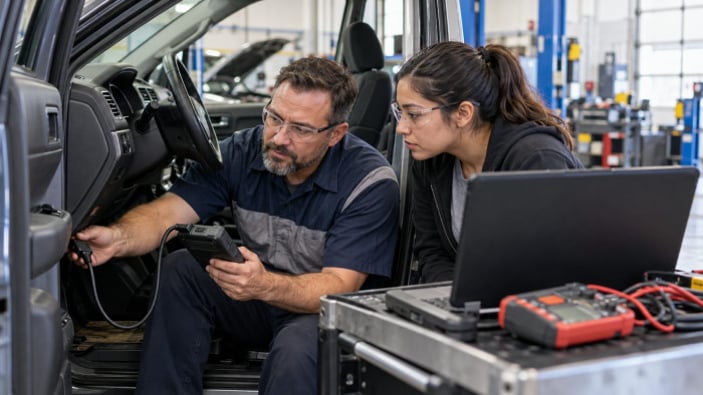
Automotive instructor skills combine technical explanation, student assessment, shop supervision, and lesson planning. You need to demonstrate a procedure, recognize where a student’s reasoning breaks down, and organize lab work so students can practice safely. O*NET OnLine, accessed October 26, 2026, identifies evaluating student work, supervising equipment use, maintaining laboratory tools, and developing course content among postsecondary CTE teachers’ tasks.
| Key fact | Detail | Source |
|---|---|---|
| Teaching responsibilities | Evaluate student work, supervise laboratory work, and maintain student records. | O*NET OnLine; accessed October 26, 2026 |
| Career/Technical Education Teachers, Postsecondary — annual median pay | $63,820 | BLS Occupational Employment and Wage Statistics (OEWS), May 2025 |
| Career/Technical Education Teachers, Secondary School — annual median pay | $66,270 | BLS Occupational Employment and Wage Statistics (OEWS), May 2025 |
Skills and software automotive technology instructors use: the short answer
Start with instructional skills you can demonstrate in a brakes or electrical lesson:
- Skills: instructing, active listening, monitoring, and problem solving during demonstrations and student practice.
- Knowledge: teaching methods, mechanical principles, computers and electronics, and clear technical communication.
- Technology and tool groups: learning management systems, presentation software, spreadsheets, computers, audiovisual aids, and laboratory tools and equipment.
BLS counts automotive technology instructors within Career/Technical Education Teachers, Postsecondary and Career/Technical Education Teachers, Secondary School. These categories cover teaching across high school, career-center, and technical-college settings. O*NET OnLine’s secondary CTE teacher profile, accessed October 26, 2026, also emphasizes demonstrations, equipment care, work experiences, and student organizations.
When comparing postings, use the broader CTE teacher duties to identify responsibilities beyond automotive instruction.
Core skills
Build your skills inventory around what you can teach, observe, and assess in a working automotive lab.
- Instructing and speaking: demonstrate a brakes procedure at a bay, explain the purpose of each step, and state what successful student performance looks like.
- Active listening and learning strategies: ask a student to explain a diagnostic decision. Use the explanation to choose another demonstration, guided practice, or individual instruction.
- Monitoring: watch students’ sequence, torque practices, and safety habits while checking their understanding. Give feedback that identifies the action to change.
- Critical thinking and complex problem solving: have students connect observations to possible causes during an electrical lesson. Ask them to justify the next diagnostic step before proceeding.
- Time management and coordination: pace lab rotations, prepare materials, and coordinate work-based learning objectives with an industry partner.
Interview rehearsal example: “During a diagnostic demonstration, I would explain the decision process, then ask students to explain their next step. If their reasoning showed a gap, I would revisit that concept before moving to independent practice.”
Prepare a brakes or electrical lesson example showing how student explanations led you to repeat a demonstration or change the next practice activity.
Knowledge areas
Organize your knowledge around the decisions you make while teaching an automotive program of study:
- Education and training: sequence a brakes or electrical unit, choose demonstrations, and connect performance assessments to lesson objectives.
- Mechanical knowledge, computers and electronics: explain system operation and help students connect technical concepts to diagnostic reasoning and service information.
- English language, mathematics, and customer and personal service: teach students to interpret a repair order, explain calculations, and communicate a repair recommendation clearly.
- Administration and management: maintain a gradebook and shop schedule, organize supplies, and discuss instructional priorities with an advisory committee.
For each area, identify a classroom artifact or shop example you can discuss. Use the automotive technology instructor duties guide to connect that evidence to the responsibilities in a posting.
Software and technology
O*NET lists teaching and office software for postsecondary CTE teachers, while both profiles describe using computers and instructional equipment. Match each category to a teaching task you can perform.
| Category | Automotive teaching application |
|---|---|
| Learning management systems and computer-based training software | Organize lesson materials, assignments, and student practice activities. |
| Spreadsheet software | Maintain grade records and organize shop schedules or equipment inventories. |
| Presentation, word processing, and office suite software | Prepare demonstrations, lab instructions, repair-order exercises, and assessment materials. |
| Email and collaborative editing software | Coordinate instructional materials and communicate about student work experiences. |
| Computers, audiovisual aids, and laboratory equipment | Support technical explanations, demonstrate procedures, and supervise student practice. |
For diagnostics and service-information lessons, explain how you connect technical material to a demonstration and a student assessment. List software only when you can describe the teaching task you completed with it.
Lab, shop and pathway work
Bay management brings instructing, monitoring, and equipment maintenance together. You organize student rotations, establish equipment-care routines, track tool-crib inventory, and address equipment problems before they disrupt the lesson.
Lab planning example: For a brakes unit, prepare the demonstration materials, define the performance checks, and assign practice activities around available equipment. If equipment becomes unavailable, shift students to interpreting service information or explaining the procedure while you revise the shop schedule.
Work-based learning, industry-partner visits, and student-organization advising extend the same planning skills. Connect each activity to the career pathway: identify what students should observe, practice, or explain afterward, and carry that evidence back into instruction.
For a work-based learning example, explain what students practiced with the industry partner and how you assessed that work back in the automotive lab.
Work styles employers value
Show work styles through decisions in the automotive lab. Dependability and integrity appear in consistent safety expectations and accurate student records; attention to detail appears in checking procedures and documenting feedback.
Self-control and stress tolerance matter when a live demonstration goes off-script. Describe how you would pause the activity, explain the issue calmly, and give students a clear next task. Adaptability means revising a lesson when equipment is unavailable while preserving its learning objective.
Cooperation and concern for others appear when you work with a counselor or program lead to address a student’s progress. Independence and initiative appear when you identify a recurring learning problem and prepare a better teaching aid.
“Revised an electrical lesson after reviewing student explanations” gives you more to discuss than “adaptable instructor.”
How to show these skills when applying
Use the posting’s wording for pathway units, shop systems, and software when it accurately describes your experience. Pair a technical topic with an instructional action: “brakes instruction and performance assessment” or “electrical diagnostics demonstrations and individualized feedback.”
Bring a lesson outline or lab example you can explain from objective through assessment. Be ready to discuss student rotations, equipment preparation, and the feedback you would give during practice. List only tools and processes you can demonstrate at a bay or with instructional equipment.
Use the automotive technology instructor résumé guide to turn your examples into résumé language. As you browse ACTE Job Bank openings, compare each posting with your evidence of teaching, shop supervision, and pathway coordination.
Frequently asked questions
What skills does an automotive technology instructor need?
You need instructing, speaking, active listening, learning strategies, monitoring, critical thinking, complex problem solving, time management, and coordination. Show these through automotive demonstrations, student feedback, lab rotations, and work-based learning.
Which software should automotive instructors learn?
Focus on learning management systems, presentation software, spreadsheets, word processing, office suites, and email. Practice using them to prepare automotive lessons, maintain records, and coordinate student activities.
What knowledge areas matter most for auto instructors?
Education and training, mechanical knowledge, computers and electronics, English language, mathematics, customer and personal service, and administration and management all support the work. Connect them to teaching technical units, explaining repair orders, and organizing the shop.
What tools do automotive technology instructors use in the lab?
O*NET describes laboratory tools and equipment, computers, and audiovisual aids. For your application, identify the equipment you can demonstrate and explain how you supervise its use and care.
How do I show auto shop skills on a teaching résumé?
Connect automotive topics to instruction, assessment, equipment supervision, and student progress. Use accurate posting language and prepare a lesson or lab example to support each skill you list.