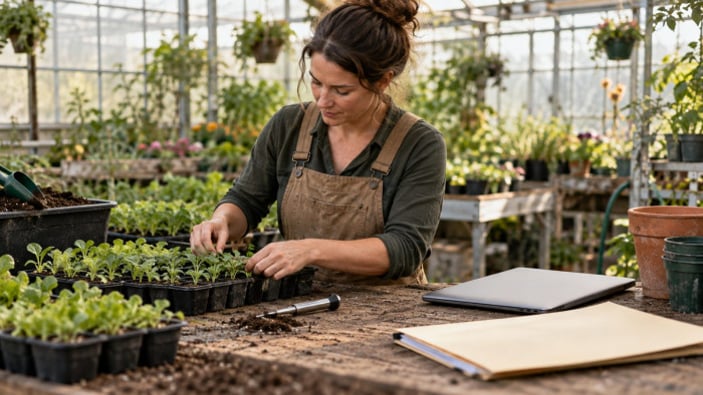
Your agriculture teacher cover letter should connect agriculture knowledge with what students will do in your classroom, greenhouse, land lab or shop. O*NET OnLine, accessed October 26, 2026, identifies demonstrations, equipment supervision, student assessment and work-experience programs among secondary CTE teachers' duties. Choose examples that show how you teach and supervise the pathway named in the posting.
| BLS occupation | National annual median pay | Source |
|---|---|---|
| Career/Technical Education Teachers, Secondary School | $66,270 | BLS Occupational Employment and Wage Statistics (OEWS), May 2025 |
| Agricultural Sciences Teachers, Postsecondary | $98,700 | BLS OEWS, May 2025 |
What an agriculture teacher cover letter should do
Keep your letter under a page. Name the school or program, identify its emphasis in plant science, animal science, agricultural mechanics or agribusiness, and connect your experience to teaching and supervising that work.
BLS counts agriculture teachers within Career/Technical Education Teachers, Secondary School in middle and high school agriculture programs, and within Agricultural Sciences Teachers, Postsecondary when teaching sits at a technical or community college. These occupation titles frame the settings; use the actual position title from the posting in your letter.
Select a teaching example that needs explanation beyond a résumé bullet. Use your agriculture teacher résumé for the broader record, then let the letter explain how you guided students through a relevant agriculture task.
Template
Replace each bracket with your agriculture teaching, facility-supervision or advising experience. Remove any greenhouse, land lab, shop or livestock responsibility you have not handled.
Dear [Hiring Committee or Contact Name]:
I am applying for the [Position Title] position at [School or Program]. My experience in [Agriculture Experience] and [Teaching, Demonstration or Student-Supervision Experience] connects with your emphasis on [Career Pathway Emphasis]. I would bring that experience to instruction in your [Greenhouse, Land Lab, Shop or Livestock Facility].
Your posting's focus on [Specific Program Duty] interests me because [Connection to Your Experience]. In [Relevant Setting], I [Planned and Delivered a Lesson or Demonstration]. I also [Assessed Student Work or Supervised Equipment Use], using [Actual Assessment or Supervision Practice] to guide students' next steps.
I support students by [Specific Coaching Practice] and collaborate with colleagues through [Planning or Progress-Review Example]. My experience with [Student Organization and Actual Advising Work] connects student activities to [Pathway Learning]. Through [Actual Employer or Advisory Committee Work], I [Relevant Contribution to Instruction].
I would welcome a discussion of how my experience could support [School or Program]'s agriculture program of study. Thank you for considering my application.
Sincerely,
[Your Name]
Before sending, check that the pathway named in your opening matches the agriculture task and teaching example you explain.
Filled example
This example addresses a high school or career-center agriculture position. Adapt its wording only where it accurately describes your experience.
Dear Hiring Committee:
I am applying for the Agriculture Teacher position at [School or Career Center]. My experience planning agriculture lessons and supervising greenhouse projects connects with your posting's emphasis on plant science and applied learning. I would bring classroom instruction, practical demonstrations and student coaching to your agriculture career pathway.
In greenhouse instruction, I establish the lesson objective, demonstrate the task and explain safe equipment use before students begin. During project work, I monitor procedures, enforce safety rules and ask students to explain their decisions. I assess progress through laboratory work, projects and tests, then use those observations to plan further instruction and maintain student records.
I have also advised supervised agricultural experience as work-based learning in agriculture, assessing how students apply classroom learning to workplace tasks. As an agriculture student-organization adviser, I connect activities to pathway projects and coach students as they prepare presentations about their work.
I collaborate with teaching colleagues to review student progress and coordinate instruction. Through conversations with employers and the advisory committee, I review how project expectations reflect industry practice and use that feedback when revising lessons.
I would welcome the opportunity to discuss how this experience could support your agriculture program of study. Thank you for considering my application.
Sincerely,
[Your Name]
Replace the greenhouse emphasis if the posting centers on livestock, agricultural mechanics or agribusiness. Explain how you assessed students performing the agriculture task you describe.
Showing agriculture skill and teaching together
Pair a sentence about pathway work with a sentence about teaching it. For example: “My plant-science experience includes greenhouse crop-production projects. I demonstrated the project procedure, supervised student practice and evaluated laboratory work against the lesson objective.”
For agricultural mechanics, identify the project you actually supervised and explain how you demonstrated procedures or corrected student practice. For animal science, describe the lab activity and how you checked students' understanding. Avoid substituting a list of production responsibilities for evidence of instruction.
Name supervised agricultural experience as work-based learning in agriculture when you have actually advised it. The agriculture teacher duties guide can help you identify which parts of your experience deserve space in the letter and discussion at interview.
Labs, land and student organization
Describe a repeatable routine for the facility you know. A useful sentence is: “Before greenhouse work, I state the task, demonstrate the procedure and have students explain when to stop and ask for help; during practice, I monitor equipment use and reinforce the same expectations.” Adapt that wording to your actual supervision practice.
If you have advised a student organization, connect it to instruction: “I coached students to explain their agriculture projects during student-organization presentations, linking preparation to pathway learning.” Prepare to explain how you organized the agriculture presentation and assessed the pathway knowledge students demonstrated.
Tailoring to the posting
Read for duties and facilities: greenhouse, land lab, livestock, agricultural mechanics, agribusiness, advisory committee and work-based learning. Mirror relevant terms where they describe your experience. A posting that combines agriculture teaching with broader CTE responsibilities may also benefit from the structure in the CTE teacher cover letter guide.
Match the setting as well. For middle and high schools, district career centers or regional technical centers, explain student supervision and pathway instruction. For a technical-college agriculture program, O*NET OnLine, accessed October 26, 2026, identifies laboratory and field-work supervision, course revision, assessment and student advising among postsecondary agricultural sciences teaching duties.
As you browse openings on ACTE Job Bank, save the posting's wording alongside your draft so you can check each claim against the actual assignment.
Common mistakes
Repeating your résumé line by line leaves little room to explain teaching decisions. Choose a greenhouse, land lab, shop or livestock project and show what you demonstrated, how you supervised students and what their work told you about their progress.
A letter written entirely from a producer's perspective leaves students out. A generic letter leaves the agriculture program out. Name the program, describe the facility accurately and remove livestock or lab claims that exceed what you have supervised.
Prepare to discuss the agriculture lesson, facility routine or advising activity behind each experience claim in your letter.
FAQ
How long should an agriculture teacher cover letter be?
Keep it under a page. Prioritize the agriculture pathway, a teaching example and relevant lab or student-organization responsibilities.
What should I put in the first paragraph?
Name the position and school or program, then connect your agriculture experience to its pathway emphasis. Include teaching or student supervision so the opening establishes your fit for instructional work.
How do I mention greenhouse, land lab or livestock experience?
Name the greenhouse, land lab or livestock setting you have actually supervised and describe the student task. Explain how you demonstrated procedures, monitored work or assessed learning.
Should I write a new letter for every posting?
Tailor every letter to the posting's agriculture pathway, facilities and duties. You can reuse accurate experience examples when they address the new assignment.
How do I show student-organization advising?
Describe an activity you advised and connect it to agriculture pathway learning. Explain your role in coaching, planning or supervising students rather than listing the organization alone.